Laparoscopic Ureteroneocystostomy at Plodnost
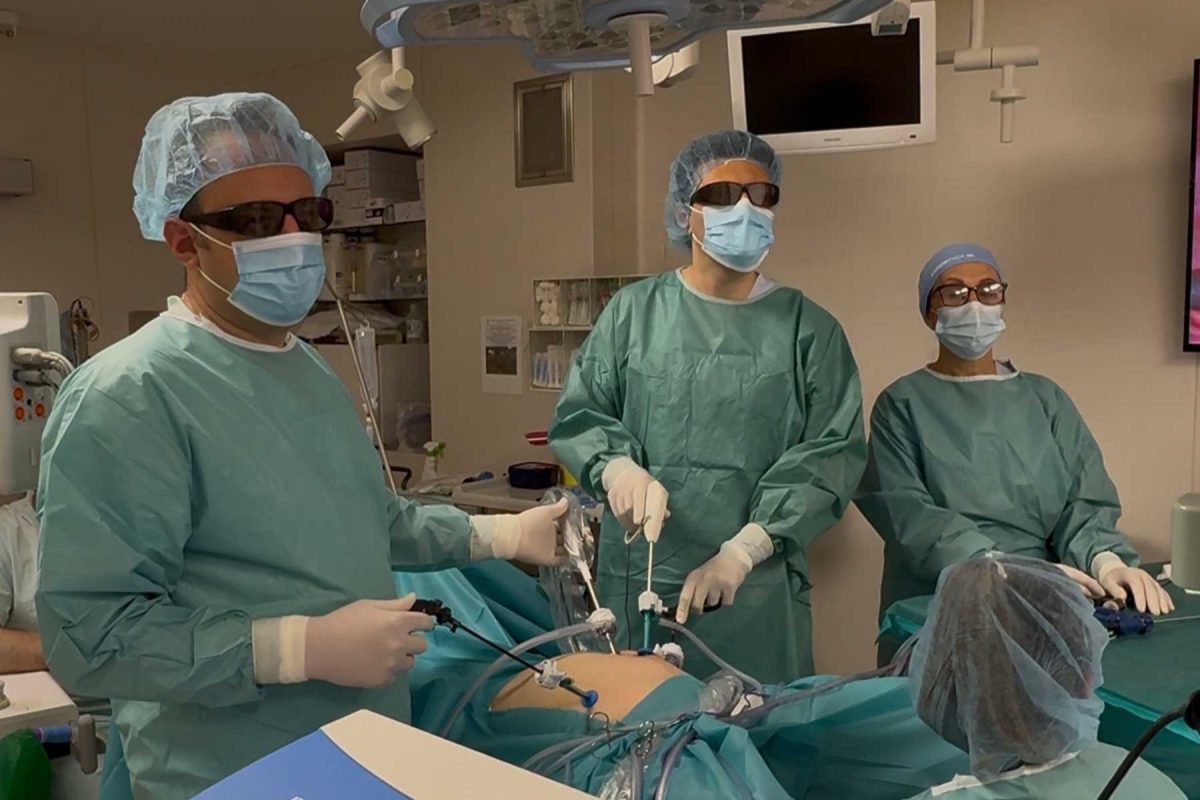
Successful Laparoscopic Ureteroneocystostomy with Psoas Hitch Technique at Plodnost Hospital
In modern gynaecological and urogynaecological surgery, the value of experience is most visible in moments when a patient presents with a complex postoperative condition, pain and the need for a fast, precise and well-planned surgical decision.
A month ago, a successful and complex laparoscopic ureteroneocystostomy was performed at Plodnost Hospital in a patient with suspected ureteral injury following a previously performed hysterectomy.
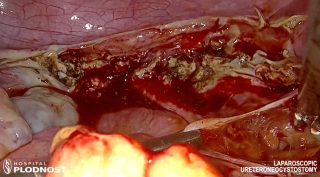
On the fourth postoperative day, surgical revision was performed. During the operative assessment, a thermal lesion of the right ureter was confirmed. This is a condition that can disrupt the normal flow of urine and lead to urinary extravasation, meaning leakage of urine outside the normal urinary tract.
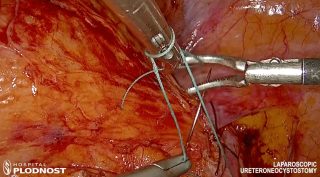
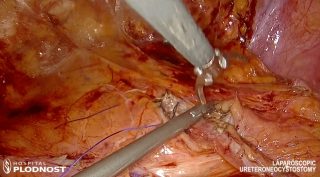
A ureterocystostomy with psoas hitch technique and ureteral reimplantation was performed laparoscopically, successfully restoring normal urinary system function.
The operation was performed by Hristijan Trpchevski, MD, Specialist in Gynaecology and Obstetrics.
This is a rare and highly complex surgical procedure, requiring exceptional laparoscopic experience, precision and surgical maturity.
 .
. 
What is a ureteral injury?
The ureter is the tube that carries urine from the kidney to the bladder. During complex pelvic operations, especially near the uterus, ovaries, blood vessels and pelvic structures, the ureter may be at risk of injury.
A ureteral injury can be mechanical, thermal or combined. In this specific case, a thermal lesion of the right ureter was confirmed, meaning that the damage was related to heat effect on the tissue.
This is a serious condition because it can lead to urine leakage, inflammatory reaction, pain, impaired urinary system function and potential risk to the kidney if it is not recognised and treated in time.
What does urinary extravasation mean?
Urinary extravasation means leakage of urine outside the normal urinary tract. When the ureter is injured, urine may not pass normally from the kidney to the bladder, but may leak into surrounding tissues or into the abdominal cavity.
This condition can cause severe pain, inflammation, discomfort, deterioration of the general condition and the need for surgical revision.
For this reason, patients who experience severe pain, fever, weakness, flank pain or worsening condition after previous gynaecological surgery should receive timely medical assessment.
Laparoscopic approach to a complex postoperative condition
At Plodnost Hospital, a laparoscopic approach was selected, meaning a minimally invasive surgical technique that allows surgery through small incisions, with clear visualisation of the pelvic structures and precise surgical control.
Laparoscopy in such cases requires significant experience. The surgeon works in an anatomically complex area, where previous surgery, inflammatory changes and altered anatomical relationships can further increase the complexity of the procedure.
The aim is not only to resolve the immediate problem, but to restore normal urine flow, preserve urinary system function and enable safe recovery for the patient.
 .
.  .
. 
What is laparoscopic ureteroneocystostomy?
Laparoscopic ureteroneocystostomy is a reconstructive surgical procedure in which the ureter is reconnected to the bladder. This technique is used when the lower part of the ureter is damaged or when the normal connection between the ureter and the bladder can no longer function properly.
In this case, ureterocystostomy, meaning reconnection of the ureter to the bladder, was performed together with ureteral reimplantation.
This creates a new functional pathway for urine to pass correctly from the kidney to the bladder.
Psoas hitch technique: why is it important?
During the operation, the psoas hitch technique was also applied.
This technique involves mobilisation of the bladder and its attachment to the psoas muscle, in order to bring the bladder closer to the ureter and allow a safe, stable and functional connection.
The psoas hitch technique is particularly important when it is necessary to reduce tension on the connection between the ureter and the bladder. For a successful outcome, the connection must be stable, well positioned and functionally appropriate.
In this patient, the operation went very well. Normal urinary system function was successfully restored, and the patient recovered well and is in good general condition.
Whatch the full youtube video here: https://www.youtube.com/watch?v=kAMpvbYX8gg
Why is this surgical procedure highly complex?
Laparoscopic ureteroneocystostomy with psoas hitch technique belongs to the group of complex reconstructive urogynaecological procedures.
The operation requires advanced knowledge of pelvic anatomy, experience in minimally invasive surgery and the ability to make calm surgical decisions in a situation where every detail matters.
In such cases, the surgeon must carefully identify the ureter, assess the condition of the damaged segment, mobilise the bladder, create the new connection and ensure normal urine flow.
This is especially challenging when the patient has already undergone previous surgery, when the tissues have changed and when there is a risk of additional complications.
The importance of timely surgical revision
In patients with suspected ureteral injury after gynaecological surgery, timely response is essential.
Symptoms may include severe pain, fever, weakness, abdominal or flank pain, changes in urination, discomfort and general deterioration of the condition.
In this case, surgical revision was performed on the fourth postoperative day. This allowed timely confirmation of the condition, the correct choice of operative technique and successful restoration of normal urinary system function.
Plodnost Hospital and advanced laparoscopic surgery
At Plodnost Hospital, laparoscopic surgery has an important role in the treatment of complex gynaecological and urogynaecological conditions. The minimally invasive approach enables precise work, improved visualisation and treatment focused on resolving the problem with less operative trauma for the patient, always depending on the individual condition.
This case shows how important the combination of timely diagnostics, surgical experience and team readiness can be.
When it comes to ureteral injury, every step matters: from recognising symptoms, to surgical revision, the choice of technique, the performance of the operation and postoperative follow-up.
The patient’s successful recovery is the most important indicator that the treatment was properly planned and performed.
When should medical help be sought after gynaecological surgery?
After any major gynaecological or abdominal operation, the patient should seek medical help if she experiences severe pain, fever, deterioration of the general condition, flank pain, urinary problems or a feeling that recovery is not progressing as expected.
Early assessment can make a significant difference. Complex conditions such as ureteral injury require timely response, accurate assessment and appropriate treatment.
Booking an appointment at Plodnost Hospital
If you have pain, urinary symptoms, complications after previous gynaecological surgery or need a professional opinion regarding laparoscopic treatment, you can book an appointment at Plodnost Hospital.
For information and appointments:
+389 47 208 880
Viber: +389 75 472 503
Plodnost Hospital continues to apply contemporary surgical approaches, with a focus on precise diagnostics, minimally invasive treatment and safe recovery for patients.
FAQ: Common questions about ureteral injury and laparoscopic ureteroneocystostomy
What is a ureteral injury?
A ureteral injury is damage to the tube that carries urine from the kidney to the bladder. It may occur during complex pelvic surgery and requires timely diagnosis and appropriate treatment.
What is a thermal lesion of the ureter?
A thermal lesion of the ureter is damage to the ureter caused by heat effect on the tissue. This type of injury can disrupt the normal function of the ureter and lead to leakage of urine outside the normal urinary tract.
What does ureteral reimplantation mean?
Ureteral reimplantation is a surgical procedure in which the ureter is reconnected to the bladder, with the aim of restoring normal urine flow from the kidney to the bladder.
What is the psoas hitch technique?
The psoas hitch technique is a surgical technique in which the bladder is mobilised and attached to the psoas muscle to allow a stable and functional connection with the ureter.
Can ureteroneocystostomy be performed laparoscopically?
Yes, in selected cases, ureteroneocystostomy can be performed laparoscopically. The decision depends on the patient’s condition, the type and extent of the injury, previous operations and the assessment of the surgical team.