Polyps
Polyps
Polyps are epithelial-origin growths that, in the vast majority of cases, are benign. In gynaecology, two types of polyps are most commonly observed: cervical polyps (on the cervix) and endometrial polyps (in the uterine cavity).
Cervical Polyps
Cervical polyps can be visualised during a routine gynaecological examination with a speculum. They originate from the lining of the cervical canal and often slightly protrude beyond the external opening of the cervix. In most cases, the polyp is small, but in some instances, it can grow several centimetres.
Clinically, cervical polyps may present with:
- Bleeding during intercourse
- Growth during pregnancy, potentially leading to genital bleeding
In most cases, cervical polyps are easily removed during a gynaecological examination without causing discomfort. The removed tissue must be sent for histological analysis.
Endometrial Polyps
Endometrial polyps originate from the endometrial lining of the uterine cavity. Their formation is commonly associated with conditions leading to increased oestrogen levels (hyperestrogenism). Risk factors include:
- Excess body weight
- Controlled ovarian hyperstimulation
- Perimenopause
- Use of certain breast cancer medications (Tamoxifen)
Clinically, endometrial polyps may present with:
- Heavy menstrual periods
- Spotting between periods
- Vaginal bleeding during menopause
- Difficulty conceiving (infertility)
The diagnosis is most often made in the first days after menstruation ends using transvaginal ultrasound, which provides clear visualisation of the polyp in the uterine cavity. Doppler ultrasound can highlight the polyp’s blood supply. Another effective diagnostic method is hysterosonography, where a saline solution is introduced into the uterine cavity, followed by a transvaginal ultrasound scan, offering excellent visualisation of the polyp.
Treatment of Endometrial Polyps
Once diagnosed, endometrial polyps may sometimes be monitored for a few menstrual cycles to see if they resolve spontaneously. However, in most cases, surgical removal is necessary.
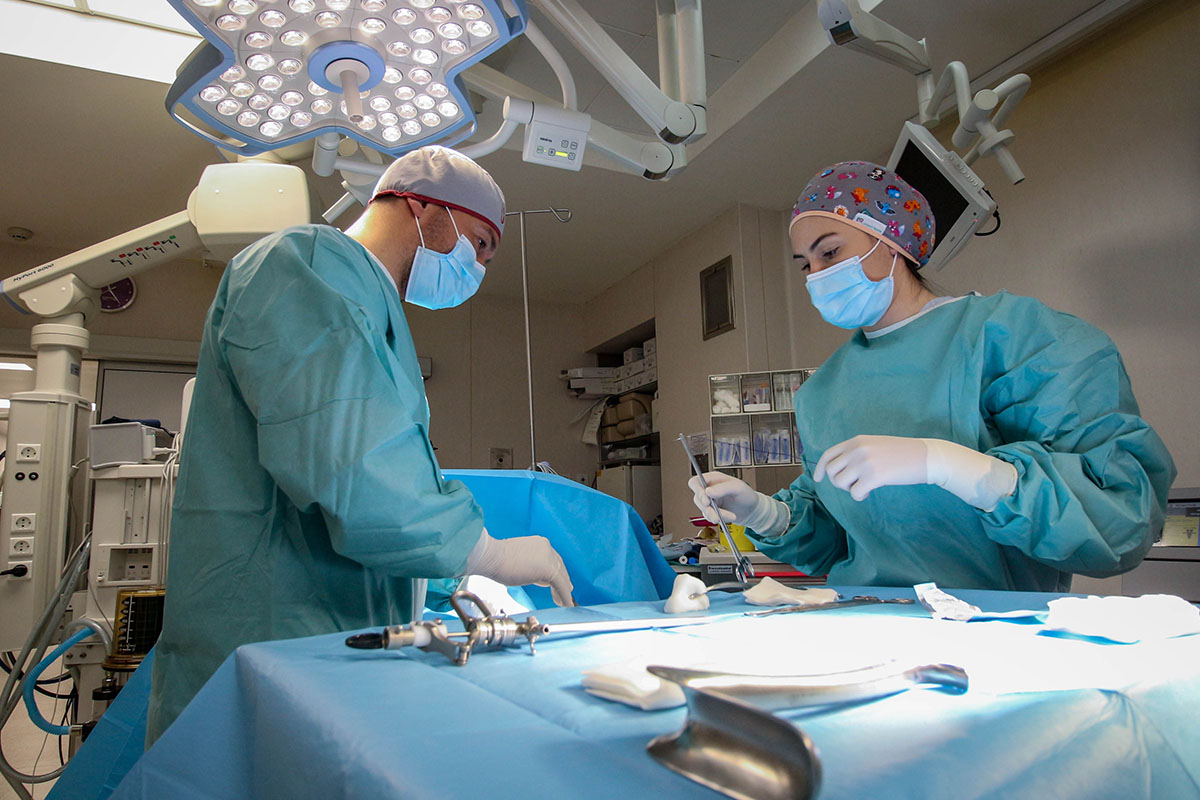
The gold standard for removal remains hysteroscopy, which allows for precise excision under direct visual control. The extracted polyp is always sent for histological analysis. Office hysteroscopy is a minimally invasive alternative that involves inserting a thin camera into the uterine cavity via the cervix without needing to dilate the cervical canal. The key advantage is that general anaesthesia is not required.
At Hospital Plodnost, we offer a full range of diagnostic and treatment options for cervical and endometrial polyps. Our specialists use the latest medical technology to provide precise and high-quality diagnosis and treatment.
Contact Us for More Information
Book your gynaecological examination at Hospital Plodnost and ensure your health is in the best hands. For more information, call our contact centre at +389 47 208 880



Gynaecology and Obstetrics Doctors

Prim. Dr Tashe Trpchevski
Consultant Gynaecologist and Sub-Specialist in Reproductive Medicine and Surgery
Dr Hristijan Trpchevski
Specialist Gynaecologist & Obstetrician

Dr Vladimir Popovski
Specialist Gynaecologist & Obstetrician

Dr Blagojce Obednikovski
Specialist Gynaecologist & Obstetrician

Dr Kristinka Pajakovska
Specialist Gynaecologist & Obstetrician

Dr Marija Hristovska
Specialist Gynaecologist & Obstetrician

Dr Vladko Gjorgjievski
Specialist Gynaecologist & Obstetrician

Dr Sotir Ropi
Specialist Gynaecologist & Obstetrician

Dr Aleksandar Jovanovski
Specialist Gynaecologist & Obstetrician
Dr Ana Vangelov
Specialist Gynaecologist & Obstetrician

Dr Sanja Milunovikj
Trainee Specialist Gynaecologist & Obstetrician
Medical-Surgical Nurses

Emilija Srbinoska
Responsible Medical Surgical Nurse

Meri Mihevska
Medical Nurse

Natasha Momiroska
Medical Nurse

Zaneta Veselica-Stefanovska
Medical Nurse

Maja Miloshevska
Medical Nurse

Biljana Dimitrovska
Medical Nurse

Sonja Aleksovska
Medical Nurse

Nikolina Risteska
Medical Nurse
Medical Nurses Midwifes

Merlinda Drala
Responsible nurse, gynecology and obstetrics department

Nadica Neshkovski
Medical Nurse

Jasmina Bozinovska
Medical Nurse

Aleksandra Dimovska
Medical Nurse

Fiona Kelja
Medical Nurse

Irena Talevska
Medical Nurse

Hristina Bumbaroska
Medical Nurse

Martina Karanfilovska
Medical Nurse

Dijana Boshevska
Medical Nurse

Sonja Fuzevska
Medical Nurse

Zaneta Vasilevska
Medical Nurse
Contact Us
SAT 08:00 – 13:00